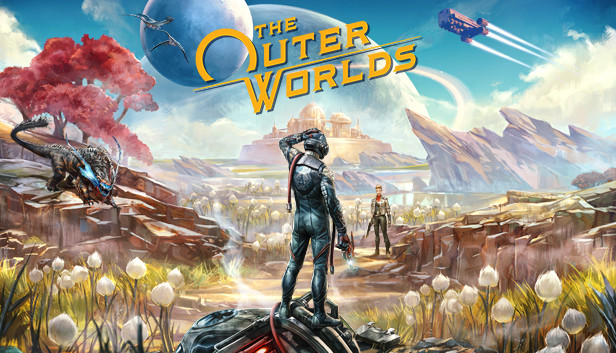
What makes The Outer Worlds stand out is its tone. It combines science fiction adventure with social satire, using humor and exaggerated corporate culture to build a universe that is entertaining but also pointed in its commentary. At the same time, it still delivers the core pleasures players expect from an RPG: character builds, branching conversations, faction choices, companions, combat, and meaningful quest outcomes. That balance gives The Outer Worlds a unique place within modern sci-fi RPGs, where personality matters just as much as mechanics.
What The Outer Worlds Is

The Outer Worlds is a science fiction role-playing game set in a colonized star system shaped by corporate control, class hierarchy, and competing interests. Players step into the role of a central protagonist navigating conflicts between powerful factions, struggling communities, and personal survival in a world where capitalism has been pushed to theatrical extremes.
A typical The Outer Worlds experience includes:
- First-person exploration across multiple planetary locations
- Dialogue-driven quest progression
- Player choices that affect factions and story outcomes
- Skill-based character development
- Companion recruitment and management
- Combat using firearms, melee weapons, and tactical abilities
This combination makes The Outer Worlds recognizable as an RPG, but its personality comes from how those systems are framed through satire and narrative flavor.
Why The Outer Worlds Stands Out
Among science fiction RPGs, The Outer Worlds stands out because it favors dense design and strong identity over sheer size. It does not try to be endless. Instead, it aims to be reactive, stylish, and memorable.
Satirical Worldbuilding
The setting uses exaggerated corporate ideology to create both humor and criticism.
Strong Dialogue Focus
The Outer Worlds places major emphasis on conversation, persuasion, and role-playing through speech.
Choice-Driven Progression
Players can shape quests and relationships through decisions rather than combat alone.
Distinctive Art Direction
Its retro-futuristic visuals give the game a colorful identity that separates it from darker sci-fi worlds.
Companion Personality
The companions are more than support characters. They help define the emotional and thematic texture of the game.
These qualities give The Outer Worlds a charm that comes from confidence rather than excess. It knows its voice, and that goes a long way in a crowded genre.
Core Elements of The Outer Worlds
To better understand why The Outer Worlds feels distinctive, it helps to look at the major design pillars that shape the experience.
| Element |
Role in The Outer Worlds |
Why It Matters |
| Dialogue Systems |
Drive quests, choices, and role-playing |
Strengthen player agency |
| Corporate Satire |
Defines the tone and world structure |
Gives the setting a unique identity |
| Companions |
Add story, support, and perspective |
Make the journey more personal |
| Skill Builds |
Shape combat and non-combat options |
Encourage varied playstyles |
| Faction Dynamics |
Influence story and quest outcomes |
Add moral and political tension |
These components work together to make The Outer Worlds feel focused and intentional. It is not trying to do everything. It is trying to do a particular kind of RPG very well.
Storytelling and Player Choice
A key strength of The Outer Worlds is the way it uses player choice to reinforce its themes. The world is full of organizations, leaders, and communities that present competing priorities, and many quests are designed to make players weigh practical outcomes against ethical concerns. The game rarely frames decisions as perfectly clean or heroic. Instead, choices often feel shaped by trade-offs, ideology, and imperfect systems.
This approach works because:
- Dialogue choices often reflect character specialization
- Quests can be resolved in multiple ways
- Faction decisions shape how the world responds
- Companion reactions add emotional context
- Humor softens the cynicism without removing the stakes
As a result, The Outer Worlds creates a role-playing experience where conversation and perspective matter as much as firepower.
Gameplay Style and RPG Identity
Mechanically, The Outer Worlds combines traditional RPG progression with accessible action combat. Players improve skills, customize loadouts, and use tactical tools while exploring settlements, corporate facilities, laboratories, and dangerous wild zones. Combat is important, but it is not the sole focus. The game often rewards careful dialogue, skill checks, and exploration-driven problem solving.
The gameplay identity of The Outer Worlds is shaped by:
- Flexible character building
- Dialogue-based role-playing opportunities
- Tactical time-dilation combat mechanics
- Exploration across distinct hub-like environments
- Strong integration between narrative and progression systems
This gives the game an experience that feels approachable while still offering enough depth to satisfy players who enjoy role-playing systems and decision-driven storytelling.
Why The Outer Worlds Resonates with Players
The lasting appeal of The Outer Worlds comes from how effectively it blends humor, critique, and classic RPG structure. It appeals to players who enjoy science fiction not just as a setting for action, but as a space for social commentary, moral ambiguity, and imaginative world design.
Its popularity is supported by the fact that it is:
- Stylish and tonally distinctive
- Focused rather than bloated
- Rich in dialogue and player choice
- Accessible while still role-play friendly
- Memorable in its setting and characters
In a genre where bigger is often treated as better, The Outer Worlds succeeds by being sharp, self-aware, and confident enough to keep the adventure compact instead of sprawling into the nearest asteroid belt.
Final Thoughts
The Outer Worlds offers a unique take on sci-fi RPGs by combining corporate satire, player-driven storytelling, colorful worldbuilding, and strong role-playing systems into a focused and memorable adventure. It delivers the expected pleasures of the genre while giving them a distinct voice shaped by humor, choice, and social commentary.
The key takeaway is simple: The Outer Worlds stands out because it brings personality and precision to the sci-fi RPG formula. Rather than relying only on scale, it builds its identity through tone, meaningful decisions, and a world that is both entertaining and sharply observant.
Explore our “Gaming” category for more insightful content!
Don't forget to check out our previous article: A Plague Tale: Innocence: A Story of Survival in France